
How to optimise length of labour through Active birthing
How to optimise length of labour through Active Birthing
So, this month I want to highlight Active Birthing and by this I mean movement in labour. I didn't know the benefits in my first pregnancy but absolutely utilised it in my 2nd and it made such a difference, to my overall experience, my recovery, my length of labour and it gave me back control and independence. So I wanted to share with you, how active birthing can benefit you
So many times particularly in a hospital setting, the bed is the centre and focus of the room, but actually spending the whole labour on the bed can be detrimental to your labour progress
Lets think about our natural human instincts and go back to older times and look at the natural behaviours of animals, we find somewhere quiet and dark and safe, we crouch down and we birth our young
We dont get on our back on a bed and expect an easy birth to follow because the majority of the time being on the bed slows things down, especially on our backs
Explore your mind and consider the journey your baby needs to take down the birth canal, on your back the pelvis isnt in an optimal position and you dont have gravity assisting you, so baby moves slower and transitions take longer, increasing labour length and sometimes intensity and can even cause your baby to shift into a position that can make labour even more difficult (ie back to back), you may have to work harder, seek more pain relief and can become tired quicker, so that be the time you reach pushing you may feel too exhausted and have no energy left
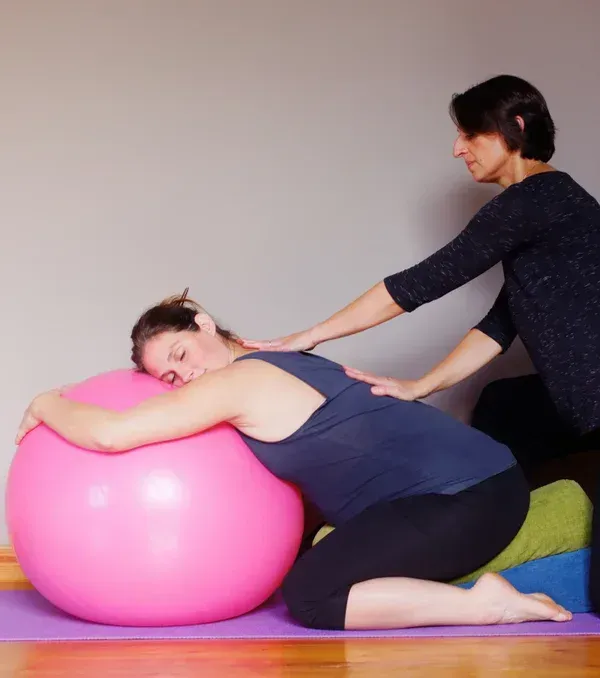
Simple adaptions such as walking, swaying, leaning over something ie ball, chair etc, sitting on a chair, a ball (get yours here https://amzn.to/47NPhk1), the toilet, all of these positions open the pelvis and gravity assists you, enabling a smoother movement for your baby down the birth canal, it can also be less painful, less intense and give you back control and independence, all increasing your feel good hormones (oxytocin and endorphins). It can also help with optimal fetal positioning particularly if you have a back to back baby, just be altering your movement to leaning over all 4s you can encourage a back to back baby to move round
Gravity helps by encouraging your baby to descend into the pelvis and exert pressure on the cervix, which heps your contractions become more effective and consequently dilating and shortening the cervix
There is a lower risk of requiring a catheter, allowing you more freedom to use the toilet when you wish
This instinct is strengthened during pregnancy, as a woman learns to trust in her body's natural ability to give birth.
With active birthing,there is less chance of you requiring stronger pain relief, as being mobile can make labour feel more manageable and you will feel more in control of your birth experience
If you should need monitoring during labour it can be adapted to suit movement ie wireless electronic monitoring
Studies show that women who move around and use upright positions during labour are more likely to have successful spontaneous vaginal births and are less likely to need C-sections or epidural pain relief.
The World Health Organization (WHO) strongly recommends freedom of movement during labour for low-risk women.
You can even go on to birth your baby in these positions, again gravity will assist whilst pushing and baby descending, ive seen many women birth standing and their baby can often arrive so much quicker
As midwives we have lots of tools in our kits to help with active birthing, birthing balls, peanut balls (get yours here https://amzn.to/4nOF6lo) rebozo scarves (get yours here https://amzn.to/4hQrKUd) and also leaning on your partner can help
Finally being upright can also prevent compression of the major blood vessels, which can occur when laying on your back, these vessels help maximise blood flow and oxygen supply to the uterus and your baby
Whilst this post promotes active birthing there is a sidenote here, of course if your tired, dizzy, have been in labour ages or your epidural is becoming heavy then of course use the bed to rest, recouperate or manage but try and remain open to regular repositioning, using a peanut ball, getting into side positions or all fours to keep the pelvis open
Sometimes it can feel as though a caregiver is restricting your movement but you should be supported to give birth spontaneously in a position of your choice, this is our natural birth giving instincts.
If you would like my free downloadable active birthing position guide, please email me @ [email protected] alternatively if you would like to access my digital Empower Birth Antenatal Education course, email me as above. To view my webpage see
Welcome to Gentle Midwifery Norfolk https://share.google/BaaFHyTT5InTlpQKK
